
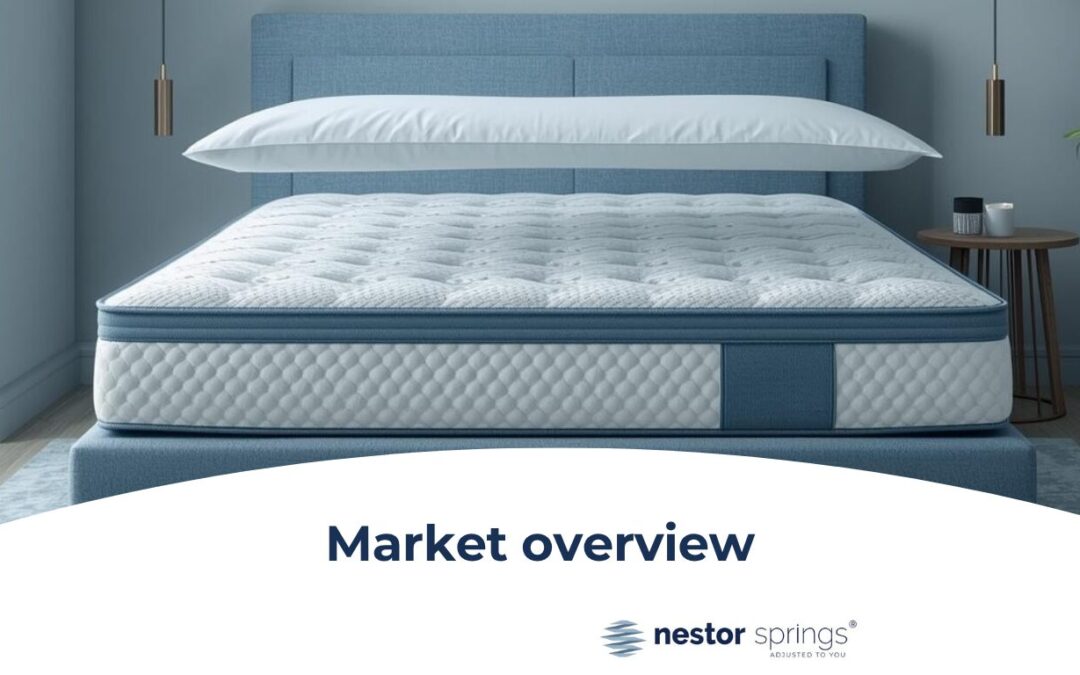
“Eco-friendly” is a term that has come to dominate nearly every industry. Consumers are increasingly asking about the origin of materials, carbon footprints, and recyclability. In the furniture industry, a realm often ruled by polyurethane foams and complex composites, the spring mattress might seem like a relic of the industrial age. But is that a fair assessment? It turns out that a well-designed spring unit, based on Pocket technology, can be one of the most sustainable components in the entire product, forming the foundation for an environmentally friendly mattress.
The key is to understand what truly constitutes a product’s ecological profile. It’s not just about raw materials, but also about durability, repairability, and, most importantly, the ability to recover materials at the end of the product’s life cycle. In these areas, spring units have several built-in advantages.
Steel – The Eco-Friendly Backbone of a Mattress
The primary component of any spring unit is steel. This is one of the most recycled materials in the world. Unlike many plastics, steel can be recycled indefinitely without losing its key properties, such as strength and elasticity. What does this mean for a mattress manufacturer? Using wire made partially or entirely from recycled steel significantly lowers the component’s carbon footprint without compromising on quality.
Modern steel production processes and the rigorous quality control we apply at Nestor Springs ensure that recycled steel has parameters identical to virgin raw material. This allows our partners to build credible marketing communications based on facts, not just declarations. By choosing a supplier who consciously manages their raw material sources, a manufacturer gains a powerful argument in discussions with retail chains and end customers for whom sustainability is a real selection criterion.
Pocket Fabric – The Unsung Hero of the Circular Economy
In a Pocket system, springs are encased in individual pockets, most often made of polypropylene (PP) non-woven fabric. While this material is durable and effective, its recycling can be challenging. However, this is where material innovations are changing the game. Non-woven fabrics produced from recyclates, such as rPET granulate (from processed PET bottles), are becoming increasingly popular.
Another direction is biodegradable materials like PLA (polylactide), which can decompose under industrial composting conditions. The choice of pocket material is a strategic decision. It affects not only the product’s ecological image but also its properties—the durability of welded joints, tensile strength, and air circulation. This is an area where you can create a competitive advantage, developing a unique solution in collaboration with an experienced supplier.
Design for Disassembly: A Circular Economy Mindset
The greatest ecological challenge for the mattress industry isn’t the components themselves, but how they are permanently bonded together. A mattress where layers of foam, non-wovens, and springs are glued with aggressive adhesives is practically impossible to recycle effectively. The entire product ends up in a landfill or an incinerator.
A spring unit facilitates thinking in terms of a circular economy. It’s possible to design mattresses where the spring core is not permanently bonded to the other layers. Using zippered covers, mechanical fasteners, or water-based hot-melt adhesives that allow for easy separation enables simple disassembly of the product after years of use. This way, the steel core can go to a steel mill, foams to chemical recycling, and textiles to be reprocessed. Such a modularly designed mattress becomes the answer to future EU regulations and growing consumer awareness.
Local Supply Chains and Optimized Transport
Ecology is also about logistics. Transporting components from distant corners of the world generates a huge carbon footprint. Collaborating with a local, European supplier like Nestor Springs is not only a guarantee of stability and timely deliveries but also a real reduction in CO2 emissions. This is a concrete, measurable benefit that can be included in sustainability reports.
Furthermore, the technology of compressing and rolling finished spring units allows for a radical reduction in cargo volume. A single truck can hold several times more units, which directly translates into fewer transports, lower costs, and a smaller environmental impact.
The Verdict
To sum up, the answer to the question posed in the title is a resounding yes—a spring mattress can be, and often is, a more ecological choice than its foam counterparts. The key is a conscious selection of components and a well-thought-out construction of the entire product. The use of recycled steel, innovative pocket materials, and designing for disassembly are the directions that are already defining the future of the industry.
If you are looking for a partner to help you implement sustainable solutions in your products, let’s talk. Our team of experts and our in-house laboratory facilities are at your disposal to create the next generation of mattresses together.